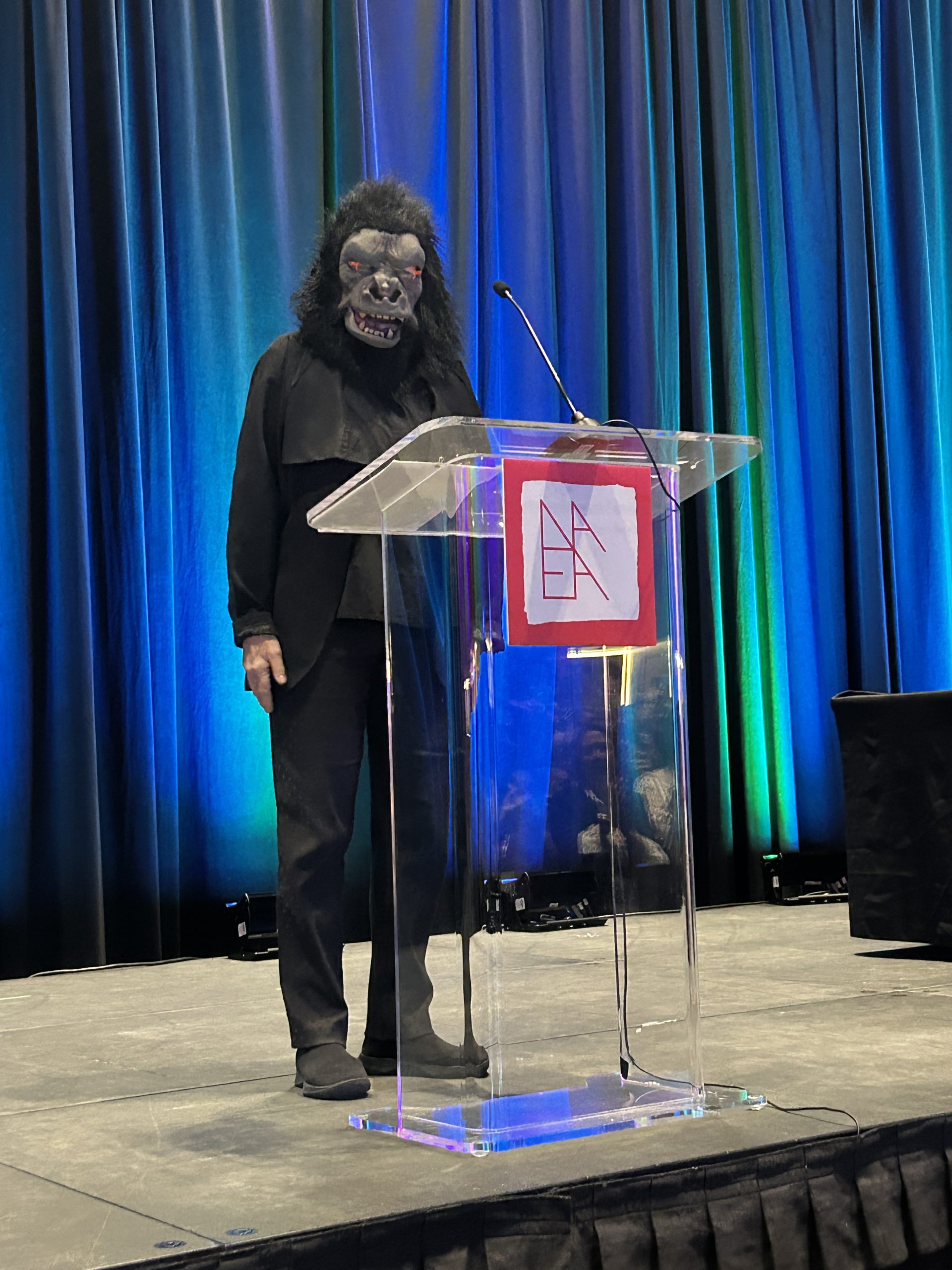
Every so often, I watch a gallery program unfold and feel a quiet unease. The educator is animated, articulate, confident: a model of enthusiasm. The visitors are engaged, laughing, nodding, listening. And yet something essential is missing.
It’s not that the teaching is bad; it’s that it’s performed.
There’s a difference between energy and performance, between authentic connection and a well-rehearsed script. Too often, I see the museum educator’s role confused with that of an interpreter on stage, expected to entertain, to hold attention, to fill the space. But the gallery doesn’t need a performance. It needs presence.
Presence begins in listening. It’s quieter, slower, harder to measure. It allows for pauses, uncertainty, and the unscripted. It doesn’t demand control of the room but instead holds the room open for others to speak, to wonder, to bring themselves to the conversation.
When teaching becomes performative, we lose the very thing that gives it meaning, relationship. The work shifts from co-creation to delivery, from dialogue to monologue. Visitors may leave entertained but not transformed.
I’ve learned to recognize that moment when performance takes over. How the subtle tension in the air, the pacing voice that fills silence too quickly. It’s the opposite of presence, which is grounded, responsive, porous. Presence trusts that silence is part of learning.
Presence also requires humility including the willingness to be changed by the encounter, to let visitors’ insights alter your own. That kind of teaching doesn’t always sparkle, but it lingers.
On my walks with Artemis, I think about this a lot. She doesn’t perform curiosity; she lives it. Her attention is full, immediate, without self-consciousness. Watching her reminds me that being present isn’t about showing something. It’s about noticing something, together.
In the galleries, that’s what I hope for: educators who know that their role isn’t to perform knowledge but to create the conditions for discovery. That kind of teaching doesn’t demand the spotlight; it builds the light around others.
Because presence, the quiet and authentic kind isn’t flashy, but it’s what stays. It’s what makes learning real.