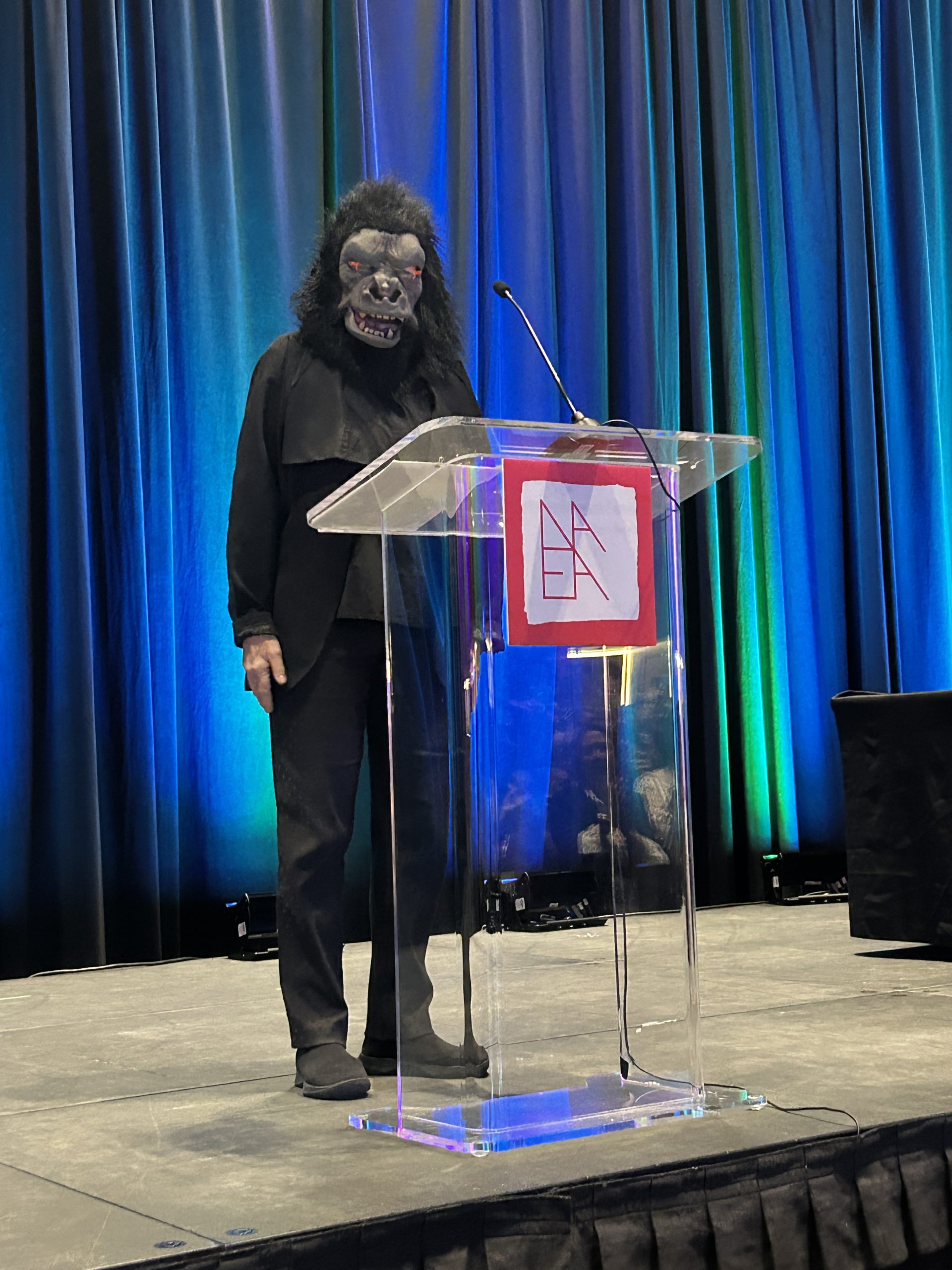
Museum education has always had a streak of resistance in it. We work inside the frame but refuse to stay confined by it. Our job is to open it up, to make space for voices that were never meant to fit neatly on the wall.
Teaching in galleries looks calm from the outside. But beneath the quiet, there’s a pulse, a deliberate act of questioning, of reordering power. Every time we ask, “What are your curious about?” or “Who gets to decide what this means?” we’re chipping away at the idea that art belongs to someone else, a history written in permanent ink.
The Guerrilla Girls taught us that museums are built on contradictions. Their masked interventions made that truth impossible to ignore. Humor and confrontation were their tools; dialogue is ours. Both do the same work; they shake the system awake.
In the gallery, the simple act of conversation becomes subversive. When students speak, when teachers disagree, when someone names what feels missing, the museum shifts. It’s no longer a monologue; it’s a negotiation. And that negotiation is where learning happens, messy, participatory, unpredictable.
I love that moment when a group collectively rewrites a label in real time, when the story on the wall cracks open and something new gets said aloud for the first time. That’s the sound of an institution expanding, however slightly, to let more of the world in.
Maybe that’s what keeps me doing this work: the thrill of making space where it wasn’t offered, the small acts of disruption disguised as questions, and the belief that conversation itself can be a form of creative defiance.
We’re not just teaching people to look at art. We’re teaching them to see differently — and that changes everything.


